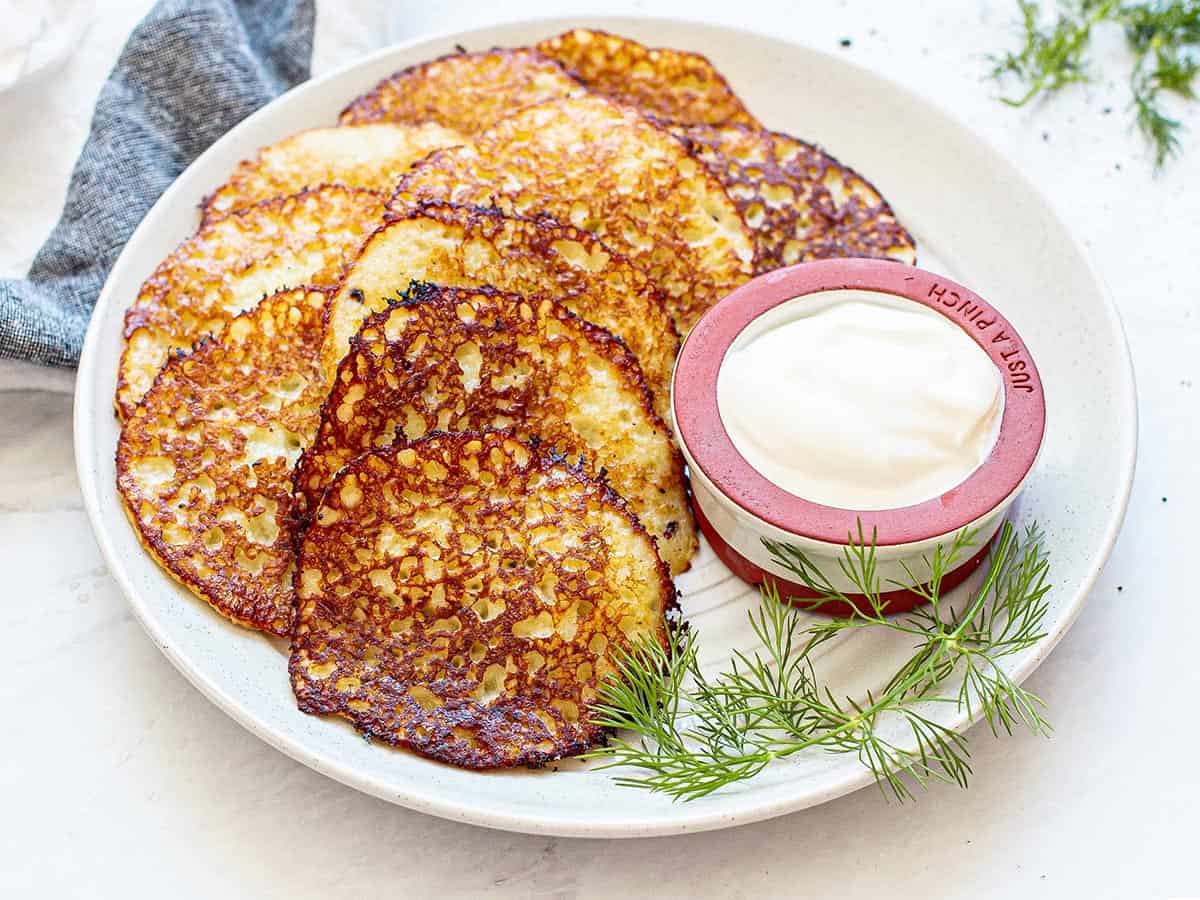
love4livi.com – Deruny, also known as Ukrainian potato pancakes, are a beloved dish in Eastern Europe, especially in Ukraine, where they hold a special place in the culinary tradition. Made from shredded potatoes, flour, eggs, and seasonings, deruny are crispy on the outside and tender on the inside. Often served with a dollop of sour cream, these savory pancakes are a simple yet satisfying dish that can be enjoyed at any time of the day. Whether served as a snack, side dish, or main course, deruny are loved for their comforting texture and rich, hearty flavor.
Key Ingredients
The simplicity of deruny is part of its charm. The ingredients needed to make these crispy potato pancakes are easily found in most kitchens, and the dish can be customized with various seasonings and accompaniments. The basic ingredients include:
- Potatoes: Shredded raw potatoes are the star of the dish. They provide the base of the pancake and give it its signature texture.
- Onions: Chopped onions are often added for flavor, adding sweetness and depth to the pancakes.
- Eggs: Eggs are used to bind the ingredients together and help the pancakes hold their shape while frying.
- Flour: A small amount of flour is used to give structure to the batter and help create a crispy texture when fried.
- Seasonings: Salt, pepper, and sometimes garlic are added to season the batter. Fresh herbs like dill or parsley are optional but can add a refreshing touch.
- Oil: Vegetable oil or sunflower oil is typically used for frying the pancakes, ensuring a golden-brown, crispy exterior.
The Cooking Process
Making deruny is a relatively straightforward process, although it does require some attention to detail to achieve the perfect texture and flavor. The first step is to peel and grate the potatoes into fine shreds. To prevent the potatoes from turning brown, they are often soaked in cold water and then squeezed to remove excess moisture. This step ensures that the pancakes are crispy when fried.
Next, the grated potatoes are combined with chopped onions, beaten eggs, flour, and seasonings to form a thick batter. The mixture is then spooned into hot oil in a frying pan, forming small pancakes. The pancakes are fried on both sides until they turn golden brown and crispy. This usually takes just a few minutes per side.
Once fried, deruny are removed from the pan and placed on paper towels to absorb any excess oil. They are best served immediately while still hot and crispy.
Serving Deruny
Deruny are traditionally served with a dollop of sour cream, which adds a creamy, tangy contrast to the crispy pancakes. Sour cream is the classic accompaniment, but there are other variations depending on personal preference or regional customs:
- Garlic Sauce: Some people enjoy deruny with a simple garlic sauce, which can be made by mixing minced garlic with sour cream or yogurt.
- Applesauce: In some areas, sweet applesauce is used as a topping, offering a balance of sweetness to the savory pancakes.
- Cheese: Grated cheese, especially a tangy variety like feta or a soft cheese, can be sprinkled on top for added richness.
- Herbs: Fresh herbs like dill, parsley, or green onions are often sprinkled on top for a burst of freshness.
Deruny can be served as a main course or as a side dish alongside meats, stews, or salads. They are also a popular snack, enjoyed on their own or as part of a larger meal.
Variations Around the World
While deruny are most commonly associated with Ukraine, they are also enjoyed in many other Eastern European countries, each with their own twist on the dish:
- Polish Placki Ziemniaczane: In Poland, potato pancakes are called “placki ziemniaczane” and are often served with sour cream or applesauce. Some variations include adding meat or mushrooms to the batter.
- Russian Draniki: In Russia, the dish is called “draniki,” and it is very similar to deruny. The key difference is that Russian draniki often have more garlic and are served with a variety of sauces, including mushroom or meat gravy.
- Belarusian Draniki: In Belarus, draniki are also a staple, typically served with sour cream, but they are sometimes filled with meat or served alongside braised meats or sausages.
- Jewish Latkes: While not exactly the same as deruny, latkes are another variation of potato pancakes popular in Jewish cuisine, especially during Hanukkah. Latkes are made with grated potatoes, onions, and flour, and they are often served with applesauce or sour cream.
Conclusion
Deruny are a quintessential comfort food, beloved for their crispy texture, savory flavor, and versatility. Whether served with sour cream, applesauce, or garlic sauce, these crispy potato pancakes are sure to please anyone who enjoys hearty, satisfying dishes. Simple yet delicious, deruny are a perfect representation of the warmth and heartiness of Eastern European cuisine, bringing people together to enjoy a timeless dish that has been passed down through generations.