
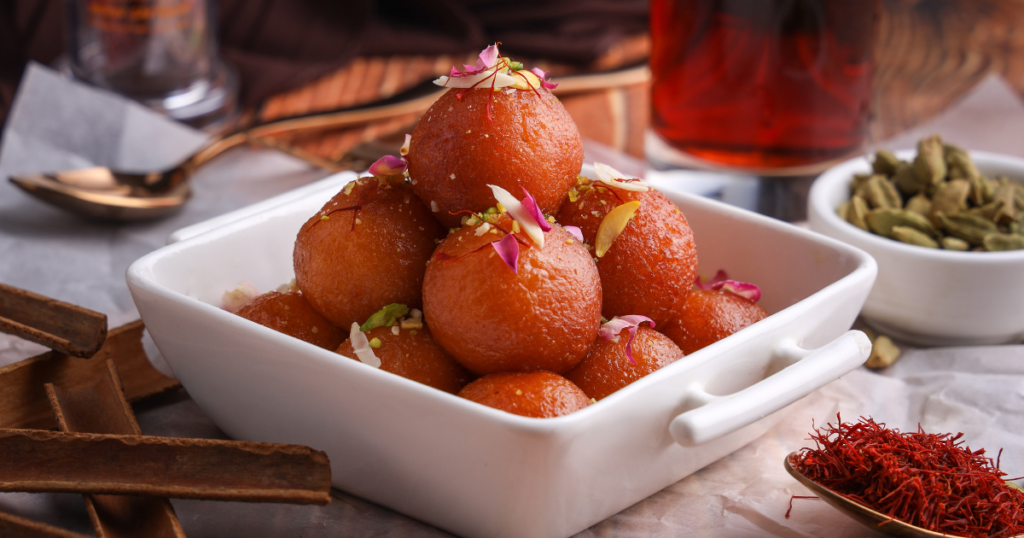
Gulab Jamun: A Sweet Symphony -A Rich History

love4livi.com – Gulab Jamun, a beloved Indian dessert, is a decadent treat that has captured the hearts of sweet lovers worldwide. These deep-fried milk balls, soaked in a fragrant rose-flavored syrup, are a delightful combination of textures and flavors.

A Rich History

The origins of Gulab Jamun can be traced back to ancient India. It is believed to have evolved from a Persian dessert called luqmat al-qadi. Over time, the dessert adapted to Indian tastes and ingredients, resulting in the delicious Gulab Jamun we know today.

The Art of Making

Making Gulab Jamun is a delicate process that requires patience and skill. The milk solids are mixed with flour, cardamom powder, and a pinch of baking soda to form a dough. Small balls are then rolled out of the dough and deep-fried until golden brown.

The key to a perfect Gulab Jamun lies in the syrup. A sugar syrup, infused with rose water, cardamom, and saffron, is simmered until it reaches the desired consistency. The deep-fried milk balls are then soaked in this fragrant syrup, allowing them to absorb the sweet and aromatic flavors.

A Culinary Delight

Gulab Jamun is a versatile dessert that can be enjoyed on its own or paired with other sweets. It is often served at Indian festivals, weddings, and other special occasions. The soft, spongy texture of the milk balls, combined with the sweet and fragrant syrup, creates a truly indulgent experience.

A Modern Twist

While the traditional Gulab Jamun remains a classic, modern variations have emerged. Some chefs experiment with different flavors, such as chocolate or pistachio, while others play with the shape and size of the milk balls. However, the core essence of Gulab Jamun, its rich, sweet, and aromatic flavor, remains unchanged.

A Sweet Ending

Gulab Jamun is a timeless dessert that continues to delight people of all ages. Its simple yet elegant presentation, coupled with its irresistible taste, makes it a perfect ending to any meal. So, the next time you crave a sweet indulgence, treat yourself to a plate of warm Gulab Jamun and experience the magic of this Indian dessert.

Kulebiaka: A Savory Pie with Rich Fillings

love4livi.com – Kulebiaka, a traditional pie from Eastern European cuisine, is renowned for its elaborate layers and hearty fillings. Typically encased in a flaky pastry, this dish often features a combination of fish or meat and rice, making it a substantial and satisfying meal.

The Origins and Tradition

Kulebiaka has its roots in Russian culinary traditions, where it has been a cherished dish for centuries. Originally a peasant food, it gained popularity among all social classes due to its versatility and ability to incorporate a variety of ingredients. Over time, kulebiaka evolved into a more elaborate dish, enjoyed during festive occasions and celebrations.

Ingredients and Preparation

The hallmark of a good kulebiaka is its rich and flavorful filling. Traditionally, it includes a mixture of fish, such as salmon or sturgeon, or meats like beef or chicken. The protein is combined with cooked rice, sautéed onions, hard-boiled eggs, and sometimes mushrooms or cabbage. Herbs and spices, such as dill or parsley, are added to enhance the flavors.

The filling is wrapped in a yeast-based or puff pastry dough, which is rolled out thin and envelops the ingredients in a secure and decorative manner. The pie is then baked until golden brown, allowing the flavors to meld together inside the crispy pastry shell.

Serving and Enjoying Kulebiaka

Kulebiaka is often served as a main course, either hot or at room temperature. It is typically sliced into portions, revealing the beautiful layers of filling within. The pie pairs well with a variety of accompaniments, such as sour cream, mustard, or a light salad, which complement its rich taste.

This dish is a popular choice for special occasions, including holidays and family gatherings, where its impressive presentation and delicious flavors make it a centerpiece on the dining table.

Cultural Significance

Beyond its culinary appeal, kulebiaka holds cultural significance as a symbol of hospitality and tradition in Russian and Eastern European households. The meticulous preparation and sharing of this pie reflect the warmth and generosity of the region’s culinary heritage.

Nutritional Aspects

While kulebiaka is a hearty dish, it can be adapted to suit different dietary preferences. By varying the fillings and using whole-grain pastry options, it can be made into a more balanced meal. The presence of proteins, carbohydrates, and vegetables in the filling provides a range of nutrients essential for a well-rounded diet.

In summary, kulebiaka is more than just a pie; it is a celebration of flavors and tradition. With its rich fillings and flaky crust, kulebiaka remains a beloved dish that continues to captivate taste buds and bring people together around the table. Whether filled with fish, meat, or a combination of ingredients, kulebiaka is a timeless classic that embodies the hearty spirit of Eastern European cuisine.