
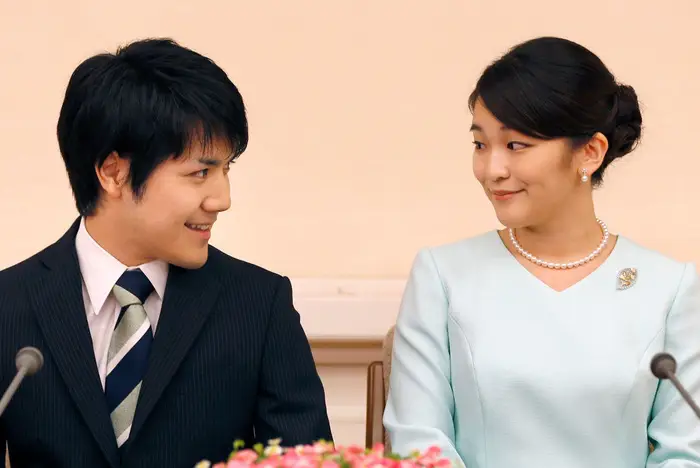
love4livi.com – Princess Mako of Japan, the eldest daughter of Crown Prince Fumihito and Crown Princess Kiko, made headlines in 2021 when she chose to marry Kei Komuro, a commoner, and renounce her royal status. This decision marked a significant departure from centuries of imperial tradition, where members of the Japanese Imperial Family were expected to marry within the aristocracy. Her choice to marry for love, despite the controversies surrounding her engagement, reshaped perceptions of the role of women in the Japanese monarchy and sparked a broader conversation about the modernization of the Imperial Family.
Early Life and Royal Background
Princess Mako was born on October 23, 1991, at the University of Tokyo Hospital to Crown Prince Fumihito and Crown Princess Kiko. As the firstborn of the heir to the throne, her early life was carefully nurtured to prepare her for the responsibilities of royal life. She grew up under the watchful eye of the public, attending the prestigious Gakushuin school, followed by Gakushuin University, where she pursued a degree in Art and Cultural Heritage. Later, Princess Mako furthered her education at the University of Edinburgh in the United Kingdom, earning a master’s degree in Art History.
Throughout her youth, Princess Mako was expected to fulfill royal duties and represent the Imperial Family at various ceremonies and events. Despite her public duties, her parents sought to maintain a sense of normalcy for her and her younger siblings. This focus on a balanced, grounded upbringing allowed Princess Mako to cultivate a sense of independence and curiosity about the world beyond the Imperial Palace.
The Engagement to Kei Komuro
Princess Mako’s life took a pivotal turn in 2017 when she announced her engagement to Kei Komuro, a law student at the time, who was not of aristocratic or noble descent. The couple met in 2012 while both were students at the International Christian University in Tokyo. Their relationship blossomed into an engagement, which was formally announced by the Imperial Household in 2017.
However, the engagement quickly became the subject of intense media scrutiny. Komuro’s family faced financial controversy when it was revealed that his mother’s financial situation had been questioned. This sparked public debates about his suitability as a future consort for a member of the Imperial Family. While both Princess Mako and Kei Komuro maintained that their love for one another was genuine, the public backlash was significant. The couple faced continuous media attention, which ultimately delayed their wedding for several years.
Despite the controversies surrounding the engagement, Princess Mako remained resolute in her decision to marry Kei Komuro. Their commitment to one another was evident, and despite the external pressure, they continued to publicly affirm their plans to marry.
Renouncing Royal Status and Marrying for Love
In October 2021, after years of delays, Princess Mako and Kei Komuro married in a private, low-key ceremony at the Imperial Household Agency, without the traditional celebrations that typically accompany royal weddings in Japan. The decision to forgo a grand public wedding was a symbolic gesture, underscoring their desire for privacy and normalcy amid the intense media scrutiny.
Under Japanese law, members of the Imperial Family who marry commoners are required to renounce their royal status. Therefore, Princess Mako became a private citizen upon her marriage to Kei Komuro. This marked the end of her official role in the Imperial Family, and she was formally stripped of her title as princess. Her departure from the monarchy was a groundbreaking moment in Japanese history, as she became one of the first female members of the Imperial Family in modern times to renounce her title for the sake of marriage.
While her marriage and renouncement of royal status were met with mixed reactions, it represented a shift in the monarchy’s approach to modernity and individual rights. The choice to marry a commoner was seen by some as an expression of personal agency, especially in a monarchy where tradition often dictates strict rules regarding marriage and succession. Others, however, viewed it as a break from the historical expectations of royal life.
Life After Marriage
Following their marriage, Princess Mako and Kei Komuro moved to New York, where Kei Komuro had been working as a lawyer. Princess Mako has stated that she and her husband intend to live a private life, away from the public eye. While her departure from the Imperial Family has allowed her greater freedom, it has also meant that she no longer has the ceremonial and public responsibilities she once held as a princess.
Though she has given up her title, Princess Mako’s legacy continues to spark discussions about the role of women in the Japanese monarchy, as well as the evolving nature of royal traditions. Her decision to marry for love rather than for royal duty has become a symbol of the changing values in Japan’s Imperial Family. It is a reminder that even within one of the world’s oldest and most revered monarchies, personal happiness and choice are becoming more recognized and respected.
A Modernizing Influence
Princess Mako’s marriage and renunciation of her royal status marked a key moment in Japan’s royal history. Her decision reflected a broader trend of modernization within the Japanese monarchy, where traditional roles and expectations are being questioned in light of evolving societal values. Her choice to marry Kei Komuro was a powerful message about the changing perceptions of royal life in Japan—particularly the increasing recognition of individual rights, the role of women, and the evolving definition of royal duty.
Though her departure from the Imperial Family was controversial for some, it undeniably opened up important conversations about the future of the monarchy. Japan’s Imperial Household Law, which limits succession to male heirs, has been a subject of increasing scrutiny. Princess Mako’s situation—combined with the pressure to modernize the monarchy in response to dwindling male heirs—suggests that the future of Japan’s imperial system may look very different from the past.
Conclusion
Princess Mako’s life and choices continue to resonate in Japan and beyond. Her decision to marry Kei Komuro, a commoner, and step away from the royal family was a landmark event in the modern history of Japan’s monarchy. It has prompted discussions about royal traditions, gender roles, and the evolving nature of modern royal families around the world.
While Princess Mako may no longer hold the title of a royal princess, her legacy as a woman who prioritized love and personal happiness over tradition has left an indelible mark on the history of Japan’s Imperial Family. Her journey symbolizes the broader shift towards modernity and individual choice within the constraints of a long-established institution.