
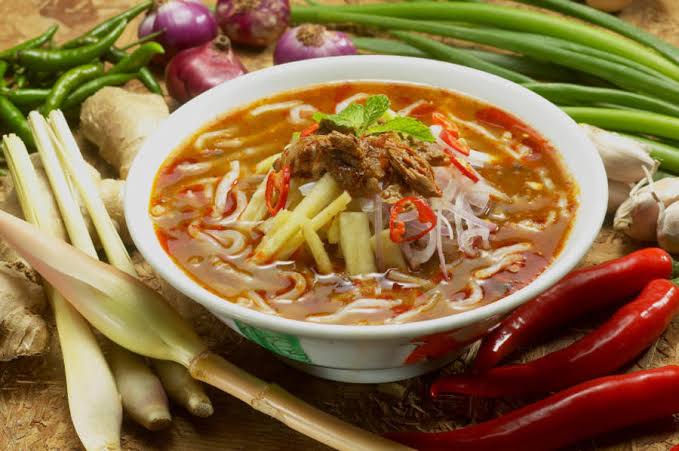
love4livi.com – Laksa is a beloved noodle soup with deep roots in Southeast Asian cuisine, celebrated for its bold flavors and rich history. This delectable dish typically comes in two main varieties: the coconut milk-based curry laksa and the tangy, sour asam laksa. Each version offers a unique taste experience, drawing from the diverse cultural influences of the region. Let’s dive into the world of laksa and discover what makes this dish so special.
The Origins of Laksa
Laksa is a culinary staple in countries like Malaysia, Singapore, and Indonesia, where it has become an integral part of the local food culture. The origins of laksa are somewhat elusive, with various theories about its beginnings. Some suggest it was brought to Southeast Asia by Chinese immigrants, while others believe it evolved from traditional Malay and Peranakan cooking practices. Regardless of its origins, laksa has become a symbol of cultural fusion, combining elements from Chinese, Malay, and other Southeast Asian cuisines.
Types of Laksa
Curry Laksa
Curry laksa, also known as laksa lemak, is a rich and creamy noodle soup made with coconut milk. The base is a fragrant, spicy paste typically made from ingredients like lemongrass, galangal, turmeric, and chili. This is then combined with coconut milk to create a luscious, aromatic broth. Curry laksa often includes a variety of proteins such as chicken, prawns, or fish, along with tofu puffs, bean sprouts, and fresh herbs. The noodles are usually thick rice vermicelli, although egg noodles are sometimes used.
Asam Laksa
In contrast, asam laksa offers a completely different flavor profile. This variety is distinguished by its tangy, sour broth made from tamarind paste, which gives it a refreshing kick. Asam laksa is typically made with mackerel and garnished with ingredients like cucumber, pineapple, mint leaves, and a dollop of shrimp paste. The noodles are usually thinner rice vermicelli, allowing the tangy broth to shine through.
The Cultural Significance of Laksa
Laksa is more than just a dish; it is a reflection of the multicultural tapestry of Southeast Asia. Each region has its own version of laksa, with variations in ingredients and preparation methods. For example, Penang asam laksa is renowned for its strong tamarind flavor, while Singaporean laksa is known for its spicy, coconut-rich broth. The dish is often enjoyed during festive occasions and family gatherings, symbolizing warmth and togetherness.
Enjoying Laksa
Whether you’re a fan of creamy, spicy soups or prefer something with a tangy kick, laksa offers something for everyone. It is a dish best savored slowly, allowing the complex flavors to meld together. Traditionally, laksa is served with a side of sambal chili paste, allowing diners to customize the level of heat to their preference.
In conclusion, laksa is a testament to the rich culinary heritage of Southeast Asia. Its bold flavors, diverse ingredients, and comforting warmth make it a favorite among locals and tourists alike. Next time you find yourself in a Southeast Asian country, be sure to seek out this iconic dish and experience the vibrant flavors that have captivated food lovers around the world.
